ADHD and Recovery: Why Bouncing Back Is Not Supposed to Be Instant
By Salvatore Barbera, Author of The ADHD Made Gentle Workbook Series
The hard thing is over. The deadline passed, the difficult conversation happened, the overwhelming day finally ended. And yet you are still not okay, hours or even days later, still running on some residual version of the activation the event produced, even though the event itself is genuinely finished. If you have ever felt frustrated with yourself for not bouncing back faster once a hard moment has technically passed, this article is about why recovery takes real time for an ADHD nervous system, and why that is not a flaw to fix.
Recovery Is a Process, Not a Switch
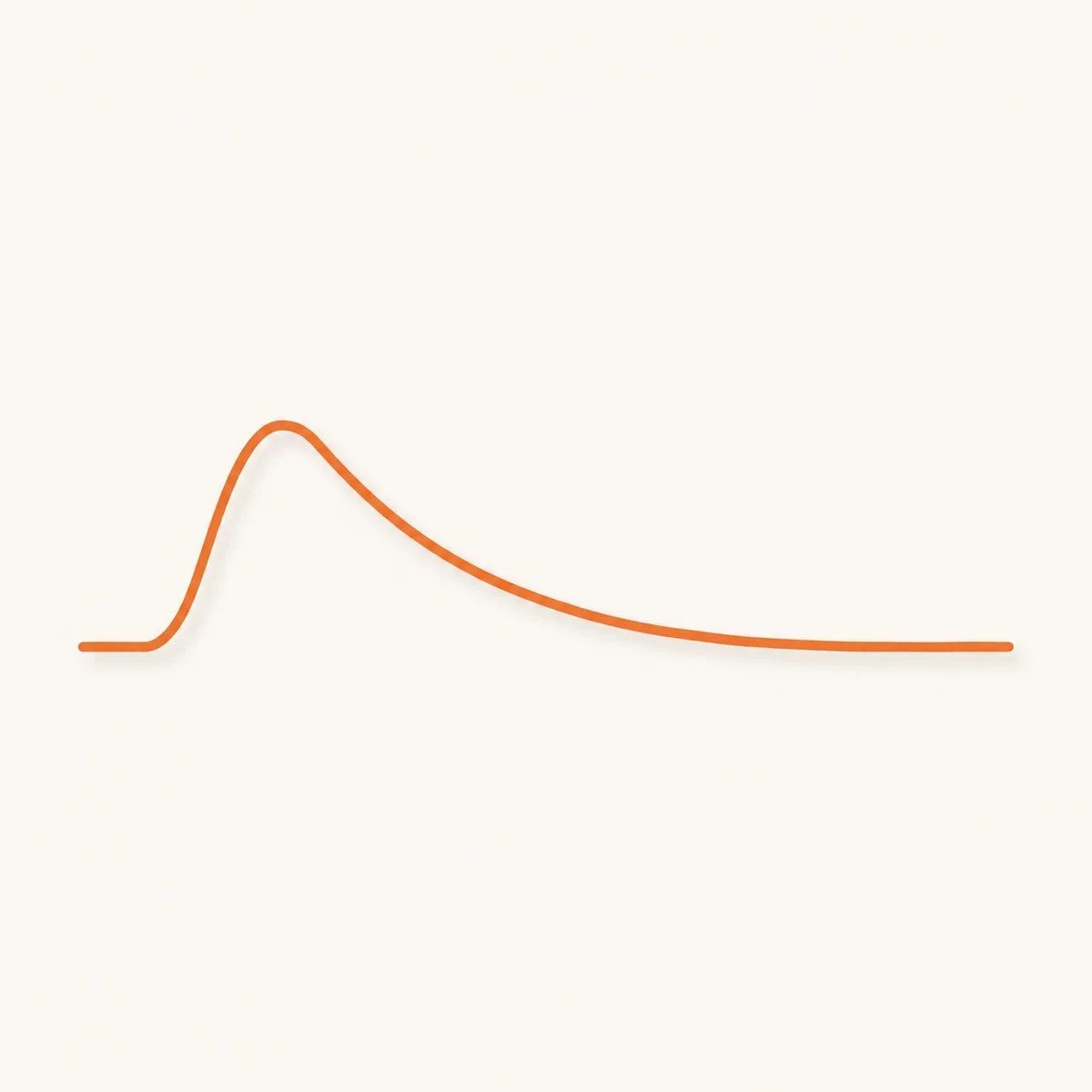
A common, unhelpful assumption treats recovery as something that should happen instantly once the triggering event ends, like flipping a switch back to a resting state the moment the stressor is removed. Real recovery does not work this way for any nervous system, and it particularly does not work this way for an ADHD nervous system, which tends to have both a narrower window of tolerance and a slower return to baseline once activated.
This means the gap between an event ending and your body actually settling is not evidence something is wrong. It is the expected shape of how activation resolves, a real physiological process that takes the time it takes, rather than a decision you are failing to make quickly enough. Expecting instant recovery and being disappointed when it does not happen adds a second, unnecessary layer of frustration on top of an already real and valid depletion.
Why This Takes Even Longer for ADHD Adults
Beyond the narrower window and slower baseline return that shape moment-to-moment regulation, ADHD adults often carry an additional layer specific to recovery: the tendency to move immediately into the next demand without a genuine pause, since a brain oriented toward what is next rather than what just happened does not always naturally build in recovery time on its own.
This means recovery frequently has to be built deliberately rather than trusted to happen automatically between tasks. Without that deliberate pause, one activating event can bleed directly into the next demand without ever having genuinely resolved, and the accumulated, unresolved activation from several such events in a row is part of what produces the deeper depletion described elsewhere as burnout.
Recovery Ties the Whole Picture Together
If you have been building a picture of your own nervous system, noticing your window of tolerance, recognizing sensory overload, learning to identify your stress responses, understanding co-regulation, recovery is the piece that closes the loop on all of it. Every tool for managing an activated moment is only half the picture without a genuine process for coming back down afterward. A brake without a way to actually rest afterward just produces a nervous system perpetually poised at the edge of its capacity, never quite returning to the baseline all the other tools are trying to protect.
This is why recovery deserves to be treated as seriously as any of the in-the-moment tools. It is not an afterthought tacked onto the end of managing a hard moment. It is the step that actually determines whether the next hard moment gets met from a genuinely rested state or from an already-depleted one, and over time, that difference compounds into either a sustainable pattern or a slow slide toward burnout.
📥 FREE DOWNLOAD: The 15-Minute ADHD Reset Template
Recovery benefits from the same kind of small, structured pause this tool provides for any overwhelming moment. This free one-page tool gives you a simple, concrete way to build in a genuine pause after something hard, rather than moving straight into whatever comes next.
Download it free when you join The Gentle Brain, a newsletter for adults with ADHD who are done blaming themselves and ready for tools that actually fit their brain.
[ JOIN THE GENTLE BRAIN AND GET YOUR FREE TEMPLATE ] → adhdmadegentle.com/newsletter

Building Real Recovery Into Your Days
Schedule Recovery Instead of Waiting for It
Rather than assuming recovery will happen naturally in whatever gaps exist between demands, deliberately build a short recovery window into your schedule after anything genuinely activating, treating it as a real, necessary appointment rather than optional slack time.
Notice When You Are Recovering, Not Just Resting
Recovery is not always identical to rest in the conventional sense. Sometimes it looks like quiet, low-stimulation time. Sometimes it looks like a specific kind of movement or a particular sensory input that helps settle an activated body. Paying attention to what actually produces recovery for you, rather than assuming any form of downtime automatically counts, helps you use recovery time more effectively.
Expect Recovery Time to Scale With the Activation
A larger, more activating event reasonably requires more recovery time than a small one, and treating every recovery period as though it should take the same fixed amount of time regardless of what produced it sets up unrealistic expectations. Let the recovery period scale honestly with what actually happened.
Resist the Urge to Immediately Fill the Gap
The moment after something hard ends often gets filled reflexively with the next task, simply because a brain oriented toward what is next does not naturally pause on its own. Deliberately resisting that reflex, even for a few minutes, gives an actual recovery window the room it needs to happen before the next demand arrives.
What This Looks Like in Real Life
Farrah and the Scheduled Pause
Farrah used to move directly from one difficult meeting into the next task without any gap, and wondered why she felt perpetually depleted by midweek. Deliberately scheduling fifteen minutes of genuine downtime after anything activating gave her body room to actually settle before the next demand arrived, and her overall capacity across the week noticeably improved.
Marcus and Recognizing Real Recovery
Marcus used to scroll his phone during breaks, assuming it counted as rest, and was confused when he still felt just as activated afterward. Once he started paying attention to what actually helped him settle, quiet time without a screen, specifically, he adjusted his breaks to match, and found his recovery noticeably more effective.
Priya and Scaling the Recovery Time
Priya used to give herself the same brief, five-minute break regardless of how activating an event had actually been, and was frustrated when it consistently was not enough after the larger ones. Letting her recovery time scale honestly with the size of what had actually happened, longer after bigger events, shorter after smaller ones, matched her actual need far better than a fixed, one-size window ever did.
💡 Pro Tip: Recovery is not a switch that flips the moment a hard event ends. It is a process that takes real time, and it takes longer for a nervous system with a narrower window and a slower return to baseline. That is not a flaw. It is simply the shape of the process.
You Were Never Supposed to Bounce Back Instantly
If you take one thing from this, let it be that still feeling the residue of a hard moment after it has technically ended is not evidence you are handling things poorly. It is the expected, physiological shape of recovery for a nervous system that takes real time to return to baseline, and expecting instant recovery was always an unrealistic standard, not a fair one.
Your brain is differently wired, and different is not defective. You do not need to bounce back immediately before you are allowed to acknowledge that something was genuinely hard. The next time you notice yourself still activated after a difficult moment has passed, you do not have to rush yourself past it or add frustration on top of the depletion. You can build in a real pause, let the recovery take the time it actually needs, and trust that the settling will come, even if it does not arrive on the schedule you wished it would.
📌 Try This Today: After the next genuinely hard moment in your day, deliberately build in a short recovery pause before moving to whatever comes next, even just five or ten minutes. Notice what shifts when the recovery is given actual room instead of being skipped entirely.
Related reading: The ADHD Made Gentle series continues with new articles every Monday and Thursday.
Ready to Go Deeper?
If this resonated, The 3-in-1 ADHD CBT, DBT & ACT Workbook for Adults gives you therapy-based tools to regulate emotions, build focus, and finally create systems that work with your ADHD brain instead of against it.
Get your copy on Amazon: https://www.amazon.com/dp/B0H6LMYYW8?maas=maas_adg_AFAA69974FEE8BC9F8203E17406AB8EA_afap_abs&ref_=aa_maas&tag=maas
Available in paperback, eBook, and hardcover.

Want the Full Toolkit?
The Omni Edition bundles this book with the RSD Workbook and the Complex PTSD CBT Workbook in one 3-in-1 collection, at a better price than buying them separately.
Get the Omni Edition on Amazon: https://www.amazon.com/dp/B0HKD72RDH?maas=maas_adg_189ADF226D65BFC77BCEFDCB6C98BEB6_afap_abs&ref_=aa_maas&tag=maas
Available in paperback, eBook, and hardcover.
Join the Gentle Brain Press Substack
Join the Gentle Brain Press Substack
I publish a new free article here every week. If you want more, the paid tier includes weekly book chapters serialized from these same workbooks, a new tool twice a month, and a monthly Behind the Brain Q&A.
Subscribe at ADHD Made Gentle on Substack: https://adhdmadegentle.substack.com/