
ADHD and Emotional Flashbacks: When an Old Feeling Takes Over the Present Moment
By Salvatore Barbera, Author of The ADHD Made Gentle Workbook Series
A tone of voice, a specific kind of silence, a look that lands the wrong way, and suddenly you are not in the room anymore, not really. You are somewhere much younger, flooded with a feeling that has nothing to do with the actual size of what just happened. This is not an overreaction, and it is not you being dramatic. For a lot of ADHD adults, particularly those who grew up facing frequent correction and criticism, this experience has a name: an emotional flashback, and understanding what it actually is changes how you can work with it.
What an Emotional Flashback Actually Is
Unlike the more commonly understood image of a flashback, a vivid visual memory replaying in detail, an emotional flashback usually carries no clear picture at all. There is no scene playing out in your mind. There is simply the feeling itself, often intense shame, fear, or a sense of being fundamentally wrong or in trouble, arriving suddenly and completely disproportionate to whatever triggered it in the present moment.
The feeling is old, even though it does not announce itself as old. It is often a preserved emotional state from earlier experiences of criticism, correction, or feeling fundamentally not good enough, triggered by something in the present that resembles those earlier moments closely enough to activate the same response, even when the present situation is objectively much smaller or entirely different.
Why This Connects So Closely to ADHD
A childhood shaped by frequent correction, a common experience for many undiagnosed or poorly understood ADHD kids, tends to lay down a lot of this particular kind of emotional material. Repeated moments of being told you were too much, careless, or simply wrong build a well-stocked reservoir of intense, preserved feeling, ready to be triggered by anything that resembles the original pattern closely enough.
This means an emotional flashback is not really a separate issue from ADHD. It is frequently a direct consequence of how ADHD was experienced and responded to over years, particularly before a diagnosis existed to explain what was actually happening. The intensity of the reaction is not evidence something is wrong with your emotional regulation in the present moment. It is evidence of how much emotional material was built up by years of a specific kind of experience.
How to Tell a Flashback From an Ordinary Reaction
Not every strong feeling is an emotional flashback, and it is worth being able to tell the two apart, since the useful response differs somewhat depending on which one is happening. An ordinary emotional reaction is generally proportionate to the situation, even if it is intense, and it tends to make sense in the context of what actually happened. A flashback carries a specific quality of disproportion, a feeling that arrives at a size or intensity that does not match the actual present-day event, often accompanied by a sense of being much younger or much smaller than you actually are in that moment.
Another useful signal is speed and specificity. An emotional flashback often arrives almost instantly, before there has been time to consciously process what happened, and it frequently carries a very particular flavor, shame, dread, a sense of being fundamentally in trouble, that shows up again and again across otherwise unrelated situations. If a similar, oversized feeling keeps appearing in response to genuinely different triggers, that repetition itself is a useful clue that old material is being activated rather than the present situation being accurately assessed each time.
📥 FREE DOWNLOAD: The 15-Minute ADHD Reset Template
Coming back to the present moment during a flashback benefits from the same kind of small, structured grounding this tool provides for any overwhelming moment. This free one-page tool gives you a simple way to reconnect with the here and now when an old feeling has taken over.
Download it free when you join The Gentle Brain, a newsletter for adults with ADHD who are done blaming themselves and ready for tools that actually fit their brain.
[ JOIN THE GENTLE BRAIN AND GET YOUR FREE TEMPLATE ] → adhdmadegentle.com/newsletter

Working With an Emotional Flashback in the Moment
Name It as a Flashback, Not a Verdict on the Present
Simply recognizing, this is an old feeling, not new information about what is actually happening right now, creates a crucial distinction between the intensity of the emotion and the accuracy of what it seems to be telling you. The feeling is real. What it is claiming about the present moment is often not.
Ground Yourself in the Actual Present
Deliberately noticing concrete details of the current moment, the room you are actually in, the actual age you actually are, the actual person you are actually talking to, helps separate the present reality from the old emotional material that has been triggered. This is not about dismissing the feeling. It is about locating yourself accurately alongside it.
Remind Yourself of Your Actual Resources Now
The original experiences that built this emotional material happened when you had far fewer resources, less power, less ability to leave a room or set a boundary. Reminding yourself of the resources you actually have now, as an adult, is not a magic fix, but it can help loosen the grip of a feeling calibrated for a much less resourced version of you.
Let the Wave Pass Without Acting From Inside It
Emotional flashbacks are intense, but they are also temporary, and acting on major decisions from inside one often produces outcomes you will need to walk back later. Where possible, delaying significant action until the wave has genuinely passed protects you from decisions made under the influence of old material rather than present reality.
What This Looks Like in Real Life
Sasha and the Tone of Voice
Sasha noticed a specific tone of voice from a manager reliably produced a flood of shame far larger than the situation warranted. Recognizing this as an emotional flashback, rather than an accurate read of how serious the moment actually was, let her pause and ground herself in the actual present rather than reacting from inside the old feeling.
Theo and the Grounding Practice
Theo used to feel completely swept away during these moments, unable to separate the old feeling from present reality. Practicing a specific grounding habit, naming his actual current age and the actual room he was in, gave him a concrete anchor to the present that the flashback alone had not provided.
Priya and the Delayed Response
Priya used to send reactive messages while still inside the intensity of an emotional flashback, and regularly regretted the tone afterward. Building in a rule to wait at least an hour before responding to anything that triggered this particular feeling gave the wave time to pass before any action was taken, and the number of messages she later regretted dropped considerably.
💡 Pro Tip: An emotional flashback is intense because the material behind it is real, not because the present situation actually warrants that intensity. Naming it as old material, rather than new information, is often the fastest way to find your footing again.
The Feeling Is Real, the Verdict Often Is Not
If you take one thing from this, let it be that a wave of old shame or fear triggered by something small in the present is not evidence you are overreacting or unstable. It is evidence of how much emotional material years of a specific kind of experience actually built, and that material can be worked with directly rather than treated as an unpredictable, unexplainable flaw.
Your brain is differently wired, and different is not defective. You do not need to eliminate every flashback before you deserve tools for the ones that happen. The next time an old, oversized feeling shows up in response to something small, you do not have to accept its verdict about the present moment as accurate. You can name it, ground yourself in what is actually happening now, and let the wave pass before you act on anything it is telling you.
📌 Try This Today: The next time a feeling arrives that seems much bigger than the moment warrants, pause and ask: is this about right now, or is this an old feeling being triggered by something that resembles an earlier pattern. Notice what shifts once you ask the question.
Related reading: The ADHD Made Gentle series continues with new articles every Monday and Thursday.
Ready to Go Deeper?
If this is familiar, The ADHD Complex PTSD CBT Workbook for Adults brings together ADHD and trauma-informed tools for the moments when an old feeling takes over, built for nervous systems holding both at once.
Get your copy on Amazon: https://www.amazon.com/dp/B0HDBNDYSP?maas=maas_adg_F46AC7A8D7631B84E890277035859FAC_afap_abs&ref_=aa_maas&tag=maas
Available in paperback, eBook, and hardcover.

Want the Full Toolkit?
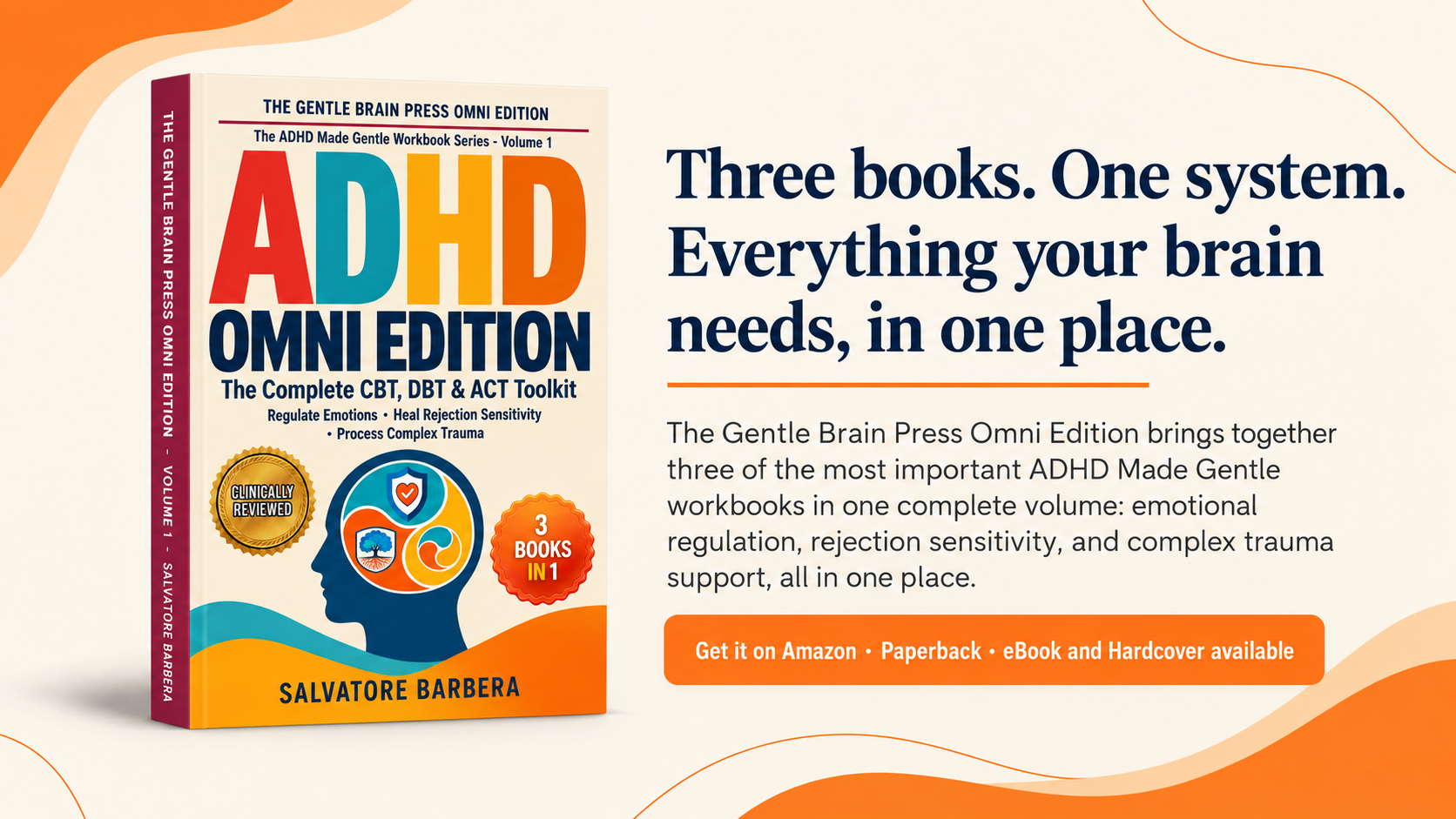
The Omni Edition bundles this book with the 3-in-1 CBT, DBT & ACT Workbook and the RSD Workbook in one collection, at a better price than buying them separately.
Get the Omni Edition on Amazon: https://www.amazon.com/dp/B0HKD72RDH?maas=maas_adg_189ADF226D65BFC77BCEFDCB6C98BEB6_afap_abs&ref_=aa_maas&tag=maas
Join the Gentle Brain Press Substack
I publish a new free article here every week. If you want more, the paid tier includes weekly book chapters serialized from these same workbooks, a new tool twice a month, and a monthly Behind the Brain Q&A.
Subscribe at ADHD Made Gentle on Substack:
